Selected workCase study
MusterDeck
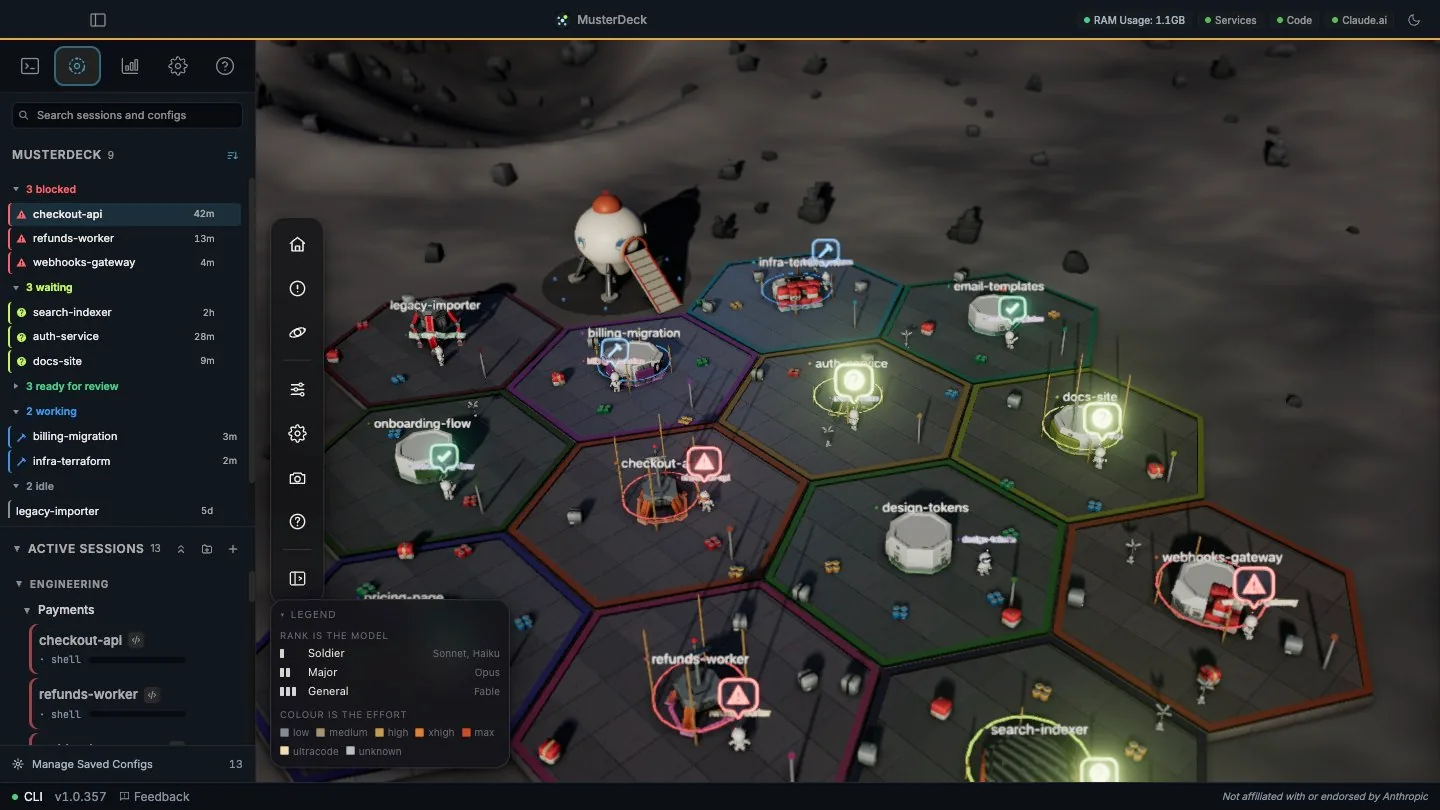
I took an open-source app for running Claude Code sessions and rebuilt it around one question: which of my agents needs me, and which has been waiting longest? Then I shipped it on macOS, Windows and Android.
- Role
- Product, design and engineering, with the code written by Claude Code under my direction
- Timeline
- July 2026 to now. First public release on September 24, 2026
- Platforms
- macOS and Windows, sessions on Ubuntu inside Windows and over SSH, and an Android app
- People
- Me, two outside testers (one on Windows, one on SSH), and everyone who sends a report from inside the app
TL;DR
The problem
Running ten or twenty AI coding agents at once, the hard part is not starting them. It is noticing the one stuck on a permission prompt for forty minutes while another finished an hour ago.What I did
I forked an MIT-licensed app, renamed it MusterDeck, and rebuilt it around a ranked list of the sessions that need me, oldest wait first. Then I added what a heavy user needs around it: account isolation, spend tracking, remote machines and a phone app.The result
101 public releases in 8 weeks, 9,978 unit tests, and 263 of 312 tracked issues closed, including 83 of the 89 feedback reports (29 of the 89 came from four other people; most of the rest are my own).
The problem: twenty agents, one person
Claude Code is a terminal app. One session is easy to watch. Ten are not: each one stops for its own reasons, at its own time, in its own tab. Before MusterDeck, the signals were all per session: a tab flashed, a badge appeared, an optional notification fired.
Nothing answered the two questions I actually had every time I looked up from my work: how many sessions want me, and which one has been stuck the longest? Every minute a session sits blocked is a minute of work that is not happening, and only I can unblock it.
I was the user. I ran sessions across several projects, several Claude accounts, my Mac and a Windows PC, and I wanted to answer them from my phone. The open-source tool I started from was built for a different setup, and on a Mac its account isolation could not sign in at all.
My role, and what was not mine
I own MusterDeck end to end: what it does, how it looks and behaves, and what ships. Claude Code wrote nearly all of the code, tests and documentation. 1,033 of my 1,087 commits are co-authored with it. My job was the direction, the rules the agent works under, the decisions, and the review.
The starting point was not mine. MusterDeck began as a fork of Claude Command Center, an MIT-licensed app by Nicholas Moger, and the idea of treating each session as a first-class object was his first. The 3D Crew view is built on Bot Crossing by Jarren Rocks, also MIT. Of the 2,189 commits in the repository, 1,087 are mine, including all 937 since I renamed it on September 12, 2026.
Constraints
- One person, with an AI agent writing the code. The agent forgets everything between sessions, so every rule had to be written down: a project guide it reads at the start of each session, 19 design documents, and a log of 475 decisions with the reason for each.
- Real people's data on disk. Sessions, accounts and conversation history live on the user's machine, and one careless migration can orphan them.
- A platform that keeps changing. MusterDeck reads Claude Code's files, hooks and status line, and any Claude Code release can change them, which is why MusterDeck checks every new release against itself.
- Four places a session can run (macOS, Windows, Ubuntu inside Windows, and remote machines over SSH) and two agents, Claude Code and OpenAI Codex.
- No telemetry, by choice. There is no usage data to steer by: the signal is feedback and my own daily use.
Four decisions that shaped it
Decision 1
A separate list ranked by what each session costs me, not a re-sorted sidebar
The sidebar already listed every session in groups the user arranged. The easy move was to sort it so whatever needed attention floated to the top.
Options
- Re-sort the existing session list by urgency.
- Add a separate, always-visible list above it, ranked by what each state costs the person.
What I chose
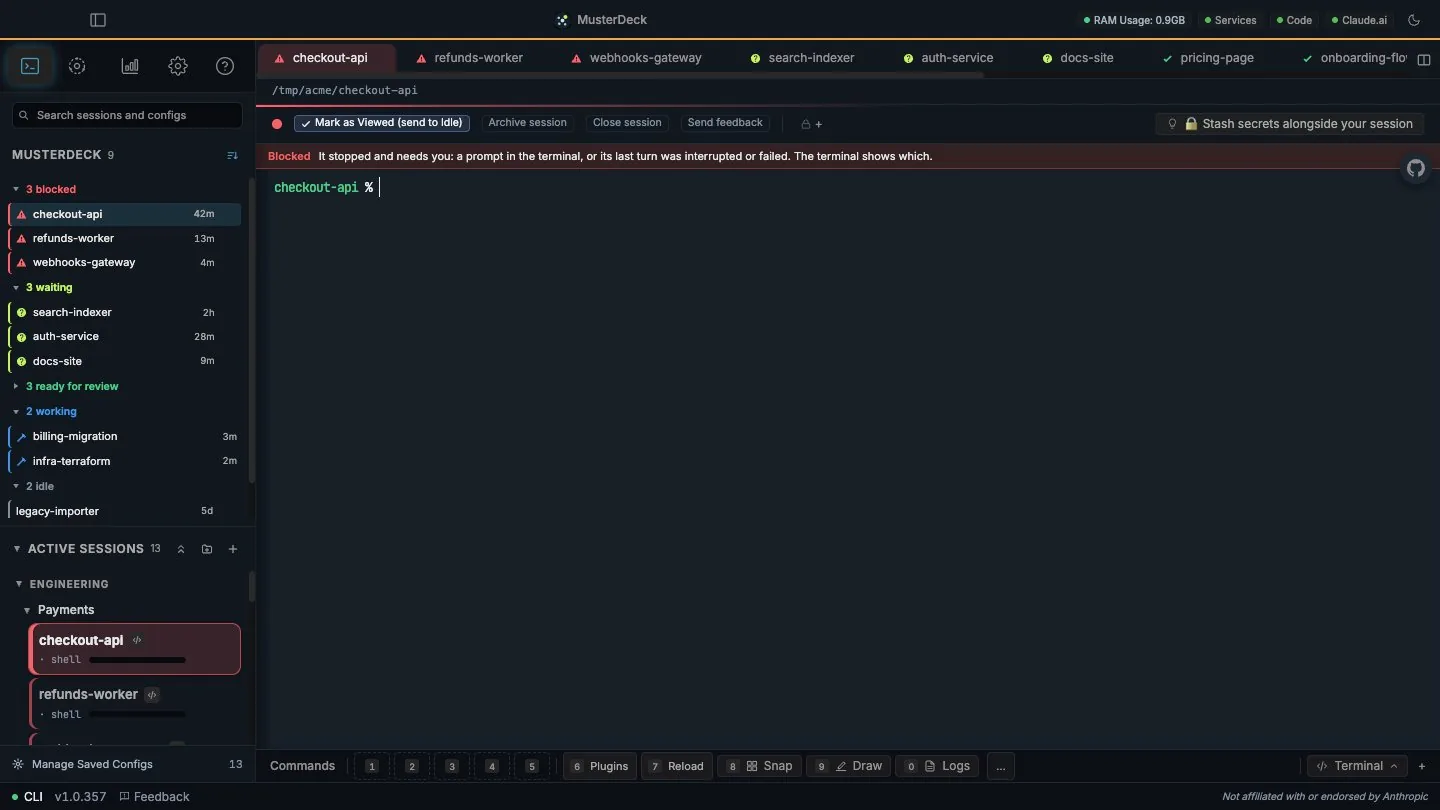
The deck: Blocked, Waiting on you, Ready for review, Working and Idle, with the longest wait first inside each group. One function ranks every session, so the dock badge, the notifications and the rows can never disagree.
- Why
- The sidebar's arrangement belongs to the user, and a list that rearranges itself moves the row out from under the cursor. A sort can only reorder what is visible; a separate list can say which session has been stuck longest. I ranked by cost: blocked is dead time only I can clear, waiting stopped at a sensible point, and ready for review wastes nothing.
- What it cost
- No session reports its own status, so MusterDeck infers it from three sources that often disagree: Claude Code's hooks, its own files and its status line. The rules kept changing with real use, and several of them were paid for with a shipped bug.
- What I said no to
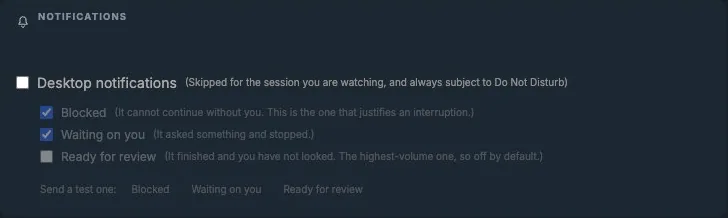
- Idle sessions never ask for attention, however old, because mixing them in is how a list stops being read. Ready for review notifications are off by default, since it is the most frequent kind, and Do Not Disturb is never bypassed.
Decision 2
Rename the product, but never move anyone's data
Going public under the inherited name, Claude Command Center, meant leading with someone else's trademark, and it read like an official Anthropic product.
Options
- Keep the name.
- Rename everything, including the data folders, with a migration.
- Rename the brand and the app identity, and freeze every path on disk.
What I chose
A new name, MusterDeck (a muster is a roll call: assemble the crew and find out who is missing), and a new app identity, so it installs beside the old one. Every folder and registry key on disk keeps its old name for good. On Windows I chose the opposite: nobody had used it there before the rename, so it starts clean under its own name.
- Why
- A migration that misses one case orphans someone's sessions and history. A folder with an old name costs the person using the app nothing.
- What it cost
- The old names live on in the code, and every contributor, human or agent, has to be told they are current. The rename also caused a real outage: one side of an authentication header changed and the other did not, so every status event from every session was rejected for ten days before I found it.
Decision 3
Reports with the logs attached, built from an allow-list and sent exactly as reviewed
A bug report was a chat message, then a request for files, then a zip made by hand. One tester's bug took three round trips, and anyone who installed from the public releases had no way to report anything at all.
Options
- Collect the app's data folder minus a list of exclusions.
- Collect only an allow-list of files, redacted inside the app before the person sees them.
- Send reports by email, through a chat bot, or as public GitHub issues.
What I chose
The allow-list. Secrets are removed before the review screen, each session's conversation is opt-in, and Send uploads the exact file the person reviewed. Reports go through a small relay I run on Railway, acting as a GitHub App, so no token ships inside the app, and they land as issues in my work queue.
- Why
- The data folder keeps credentials beside the logs. With exclusions, the day one is missed a secret leaks. Collecting again at Send could upload a line the person never saw.
- What it cost
- A service to run: the relay, the GitHub App, rate limits and a kill switch. My first limit of 10 reports a day was too tight, and two reports sat unsent for 13 hours. It is now 100 a day, with automatic retry.
- What I said no to
- Letting Claude draft the report from the logs, for now, because that would send the logs to a model.
Decision 4
When free CI ran out, make the release itself the quality gate
In mid-October my free GitHub Actions minutes ran out. The Windows installer was cross-built on a Mac and never started before it shipped, and two bugs had reached users past more than 8,000 unit tests.
Options
- Pay for hosted minutes.
- Run a Windows virtual machine on the Mac.
- Run the release on my own machines: a Windows PC, the Mac and a Linux virtual machine.
What I chose
Self-hosted runners, with each installer built and tested on its own system, and nothing published unless every suite passes. And a dated rule for the agent: every bug fix lands with a test that fails without it, and the release script refuses a fix with no test unless the commit says why.
- Why
- A Windows virtual machine on an ARM Mac tests a machine nobody uses. The test rule lives in the release, not a commit hook, because hooks are per clone and two machines commit to this repo. I measure coverage but set no threshold, because a percentage gate rewards tests written for the number instead of for a behaviour.
- What it cost
- Releases depend on my machines being on and logged in, and each release spends 4 to 10 minutes running suites locally.
The design: what I changed, and why
MusterDeck inherited a considered interface. Light and dark themes, a token system and inline icons came with the fork, and the 3D engine is Bot Crossing. What I changed is the app's identity and its language: the name, the mark, the colours, how it says what a session is doing, and where things live.
Measured with git blame on the interface code, leaving out the vendored 3D engine, 55% of the lines (42,388 of 77,147) were last written in my commits, 273 of the 532 files are entirely mine, and 28 of the 30 brand, status and first-run colour tokens were changed or added after the fork. Onboarding and the guided tour are still mostly the original author's work.
Design call 1
A name about the job: MusterDeck
- Before
- Claude Command Center: it led with Anthropic's trademark and read like an official product. The 3D view was called Colony.
- After
- MusterDeck. A muster is a roll call: assembling a crew and finding out who is missing. The 3D view became the Crew, and the attention list the deck.
- Why
- A public release could not lead with someone else's trademark. I pushed back on the shortlist ("the names sound missing a piece of what it does") until the name described the job: twenty agents running, and the hard part is knowing which one needs you.
Design call 2
An identity I art-directed, and corrected
- Before
- An orange starburst with a serif "Claude" wordmark, and no app icon at all.
- After
- A radar: crew nodes on two rings, one picked out in lime under a beam. It is drawn in three tiers, so the 16-pixel icon is its own artwork rather than a shrunken logo.
- Why
- I turned down the first drafts, then wrote an open brief for other image models ("I want them to be free"). I picked the result, caught a geometry error in its beam myself, and approved the corrected kit. I directed the identity; I did not draw it.
Before
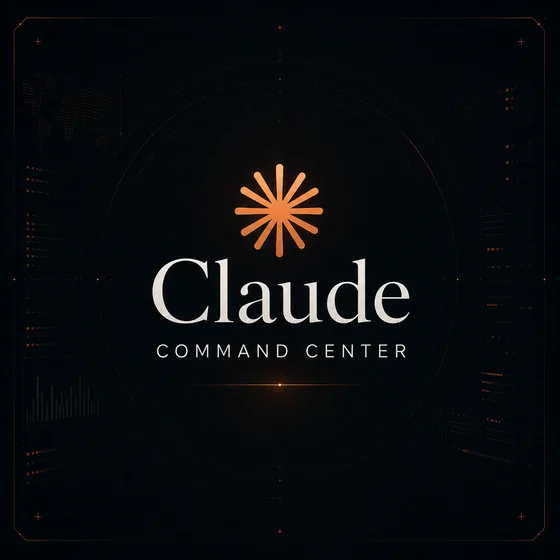
After
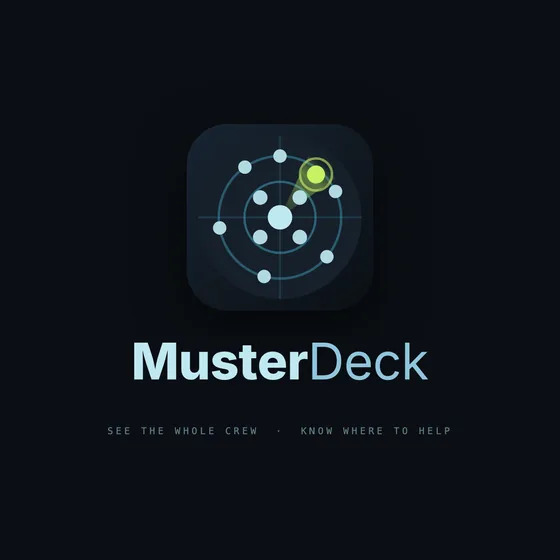
The startup splash at the fork and today. Design call 3
One warm colour, spent only on "this one needs you"
- Before
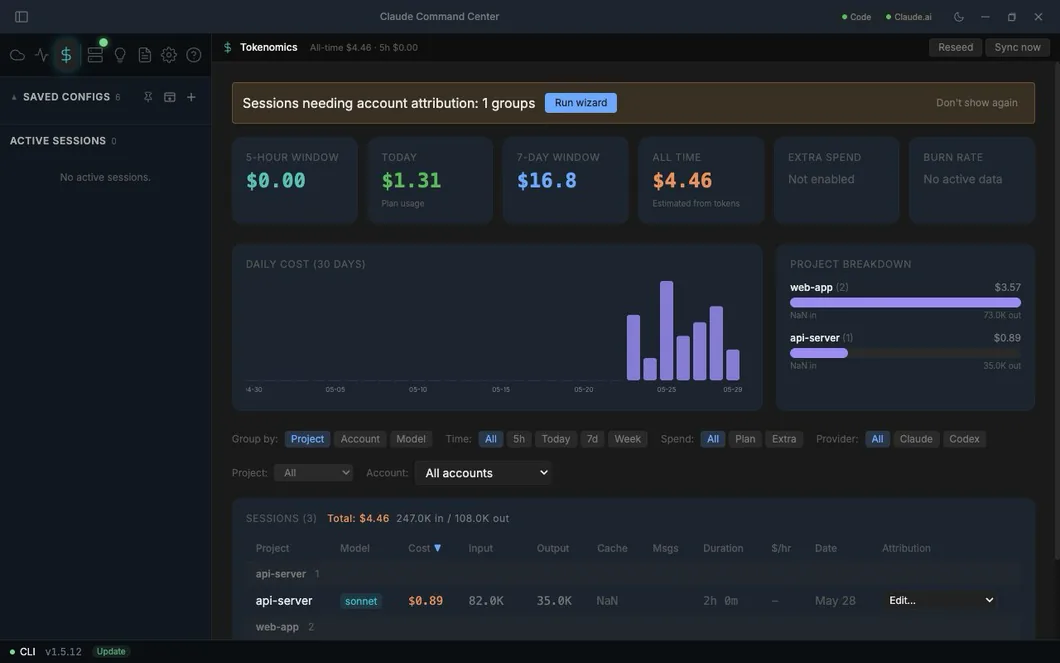
- Teal and orange brand colours, a coral first screen sitting next to Anthropic's own brand colour, and one warning colour doing double duty.
- After
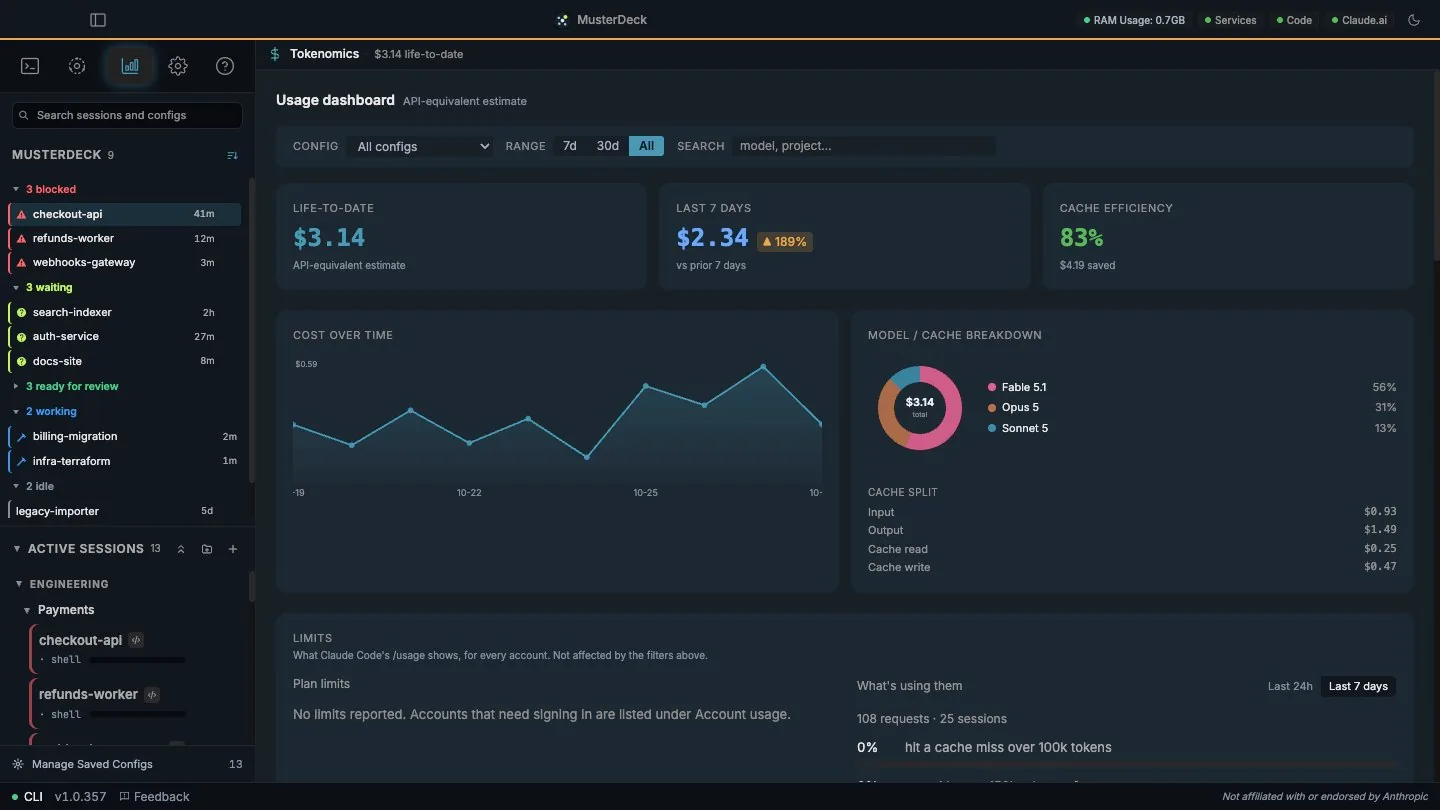
- A cold blue system where lime means exactly one thing: a session is waiting on you. General warnings moved to amber. The four states you act on are measured apart, and every text colour passes WCAG AA in both themes, held by tests.
- Why
- A glance has to tell "Claude asked you something" from "a number is getting big". When the rename landed I asked for a sweep against the new guideline, and it found five places still painting the old brand.
Before
After
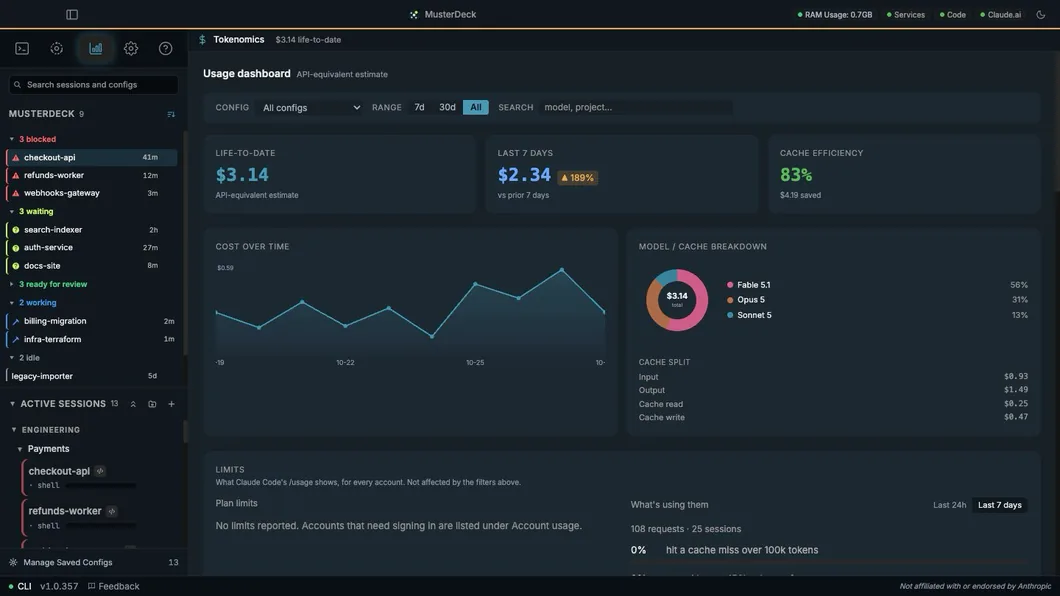
Tokenomics before and after the palette. Both screens show demo data. Design call 4
One status language on every surface
- Before
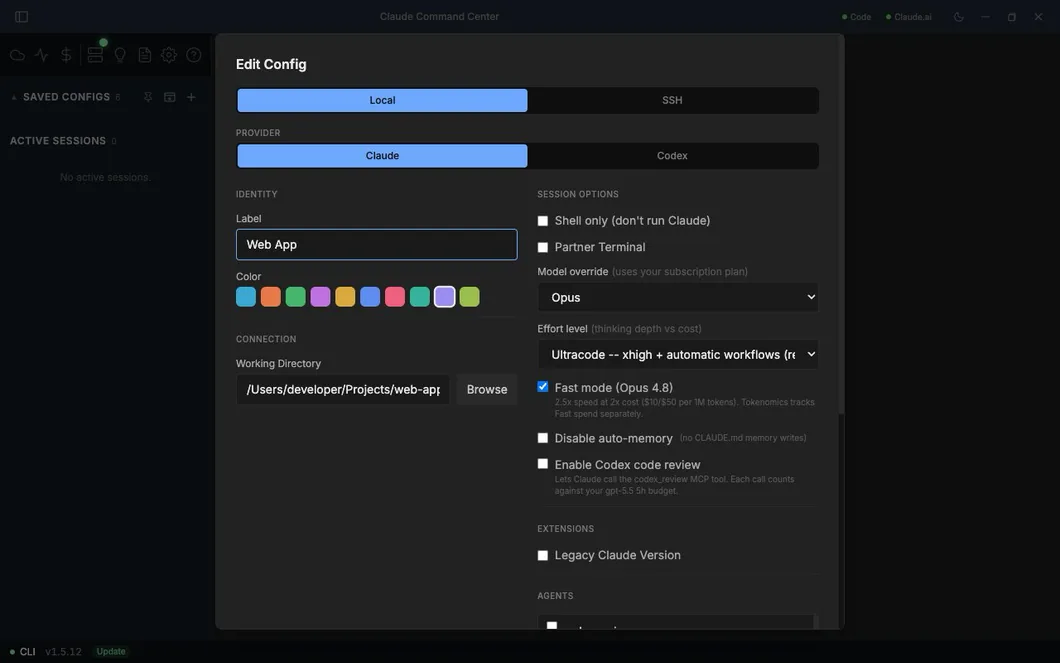
- Sessions were coloured by identity from ten swatches, working and finished shared one green, and the 3D view used its engine's own colours.
- After
- Each state has one word, one icon and one colour, the same on the deck, the tabs, the 3D Crew, notifications and the phone. Colour says what a session is doing, never which session it is, and idle draws nothing.
- Why
- "Those colors should not be theme based, they need to match the colors on MusterDeck." A red tab should never mean only that somebody once picked red, on a screen where red means blocked.
Before
After
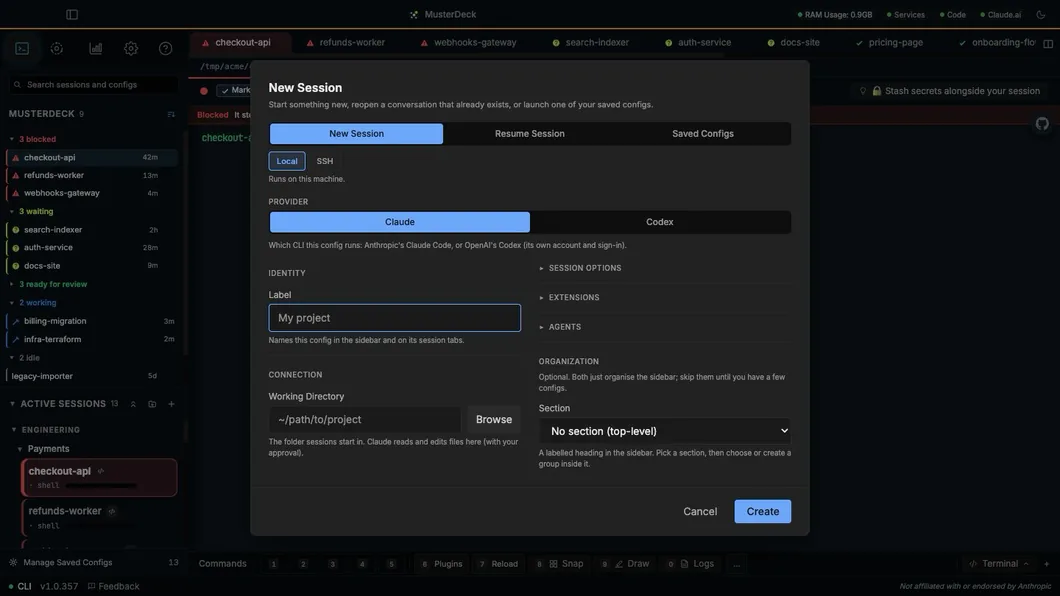
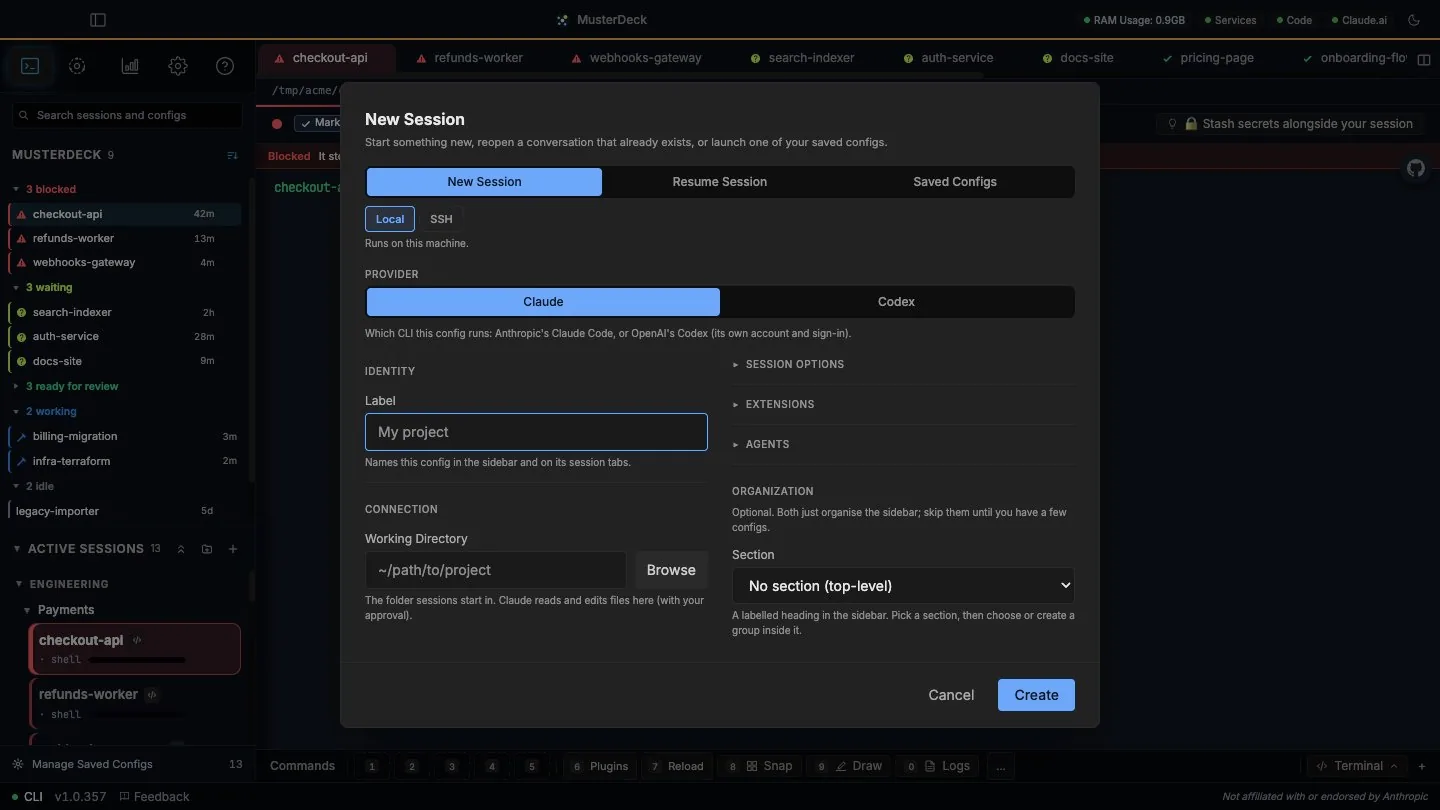
Session setup at the fork, with its colour swatches, and today, where colour belongs to status. Design call 5
A deck you cannot put away
- Before
- Eight equal icons in the rail, saved configs at the top of the sidebar, and attention shown one session at a time, such as a permission tray over the window.
- After
- Five icons in the rail, the deck as the first section of the sidebar, grouped and timed, and saved configs moved into the New Session dialog.
- Why
- "MusterDeck cannot be part of the active sections because the active sections could be collapsed." Something you rely on to tell you a session is waiting cannot be something you can put away.
Before
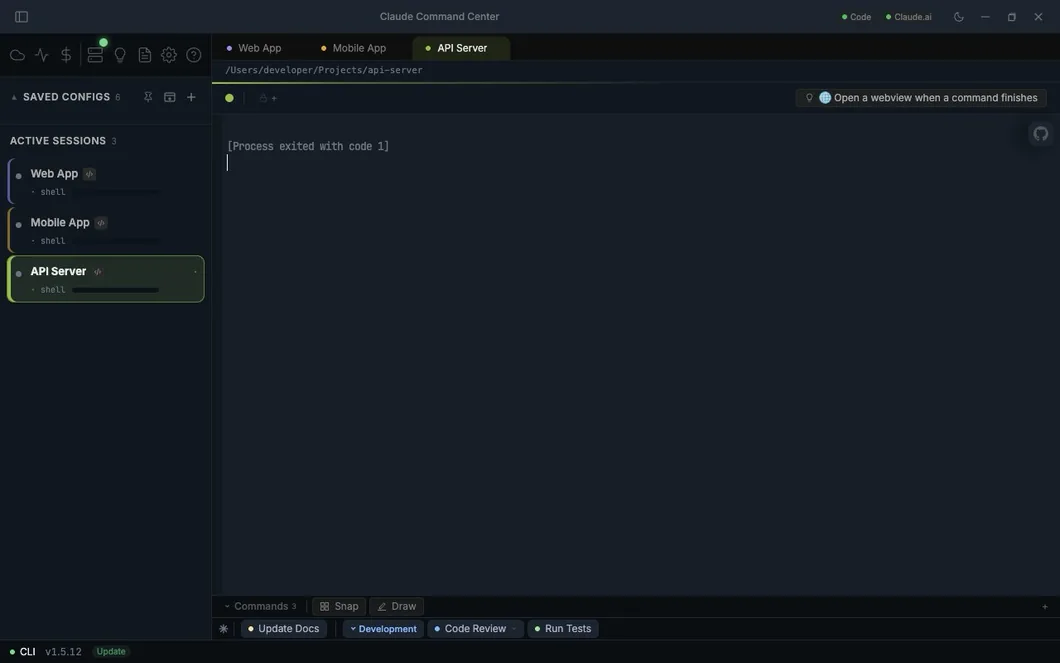
After
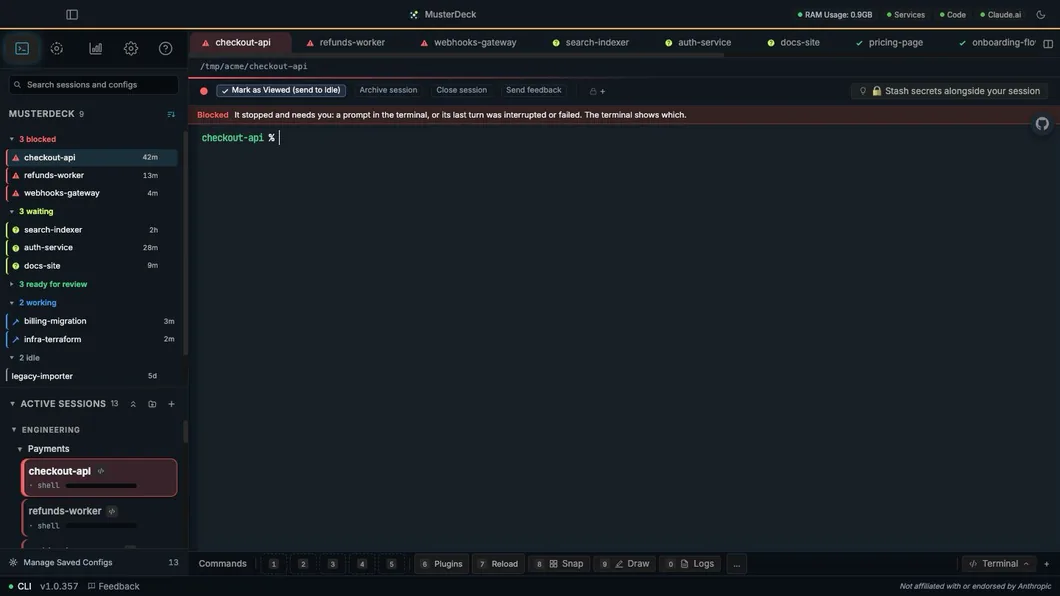
The app shell at the fork and today. Both screens show demo data. Design call 6
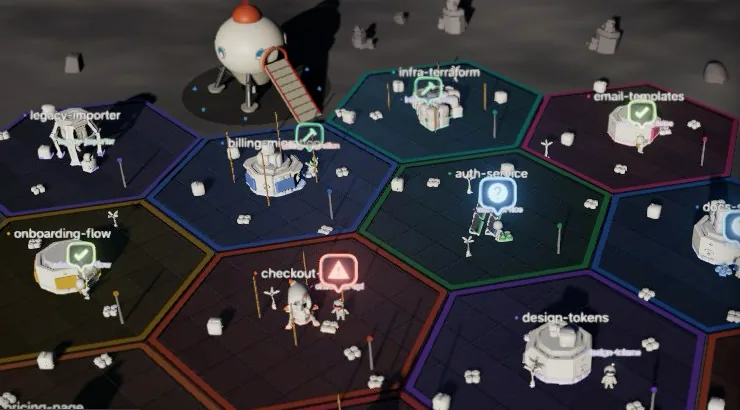
The Crew: rank is the model, colour is the effort, status wins
- Before
- The engine I embedded on September 9 drew every session as the same white astronaut. The earliest capture after the rename shows ranks, but still in the engine's status colours, with each zone flooded in its repository's colour.
- After
- Three ranks by model, each its own silhouette: in the default theme, a Watchhand for Sonnet and Haiku, a Signal mate for Opus and a Harbour master for Fable. Status rings in the app's own colours, effort as one quiet colour family on small parts, and themes that are data files, swapped without a rebuild.
- Why
- My first instinct, bold "real colors" for effort, shipped. A review of the rendered figures then showed effort out-shouting status, so I changed the rule: status first, effort second.

- WatchhandSonnet, Haiku
- Signal mateOpus
- Harbour masterFable
The three ranks close up, rendered by the app's own engine in the default theme, Harbour Signals. The names belong to the theme: the built-in Space Colony calls the same ranks Soldier, Major and General. Effort tints only small parts, such as the belt, so it never outshouts status. Before
After
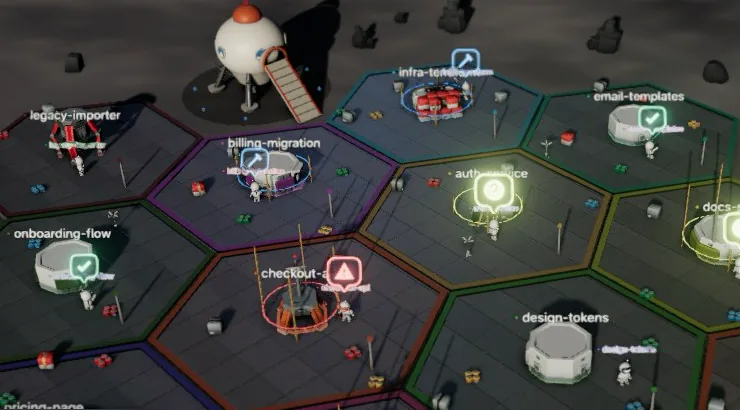
The same corner of the map in the earliest capture after the rename (September 16) and today. Status owns the colour now: the floors went quiet, so a waiting or blocked session is the brightest thing on screen. Demo data. Design call 7
The phone wears the desk's identity
- Before
- No phone app.
- After
- An Android app laid out like a familiar mobile client, in MusterDeck's colours, with the desktop's exact words and icons for every status.
- Why
- Colour alone says nothing to someone who has not learned the colours, so the phone uses the same icons and words as the desk, pinned to them by a test.
How it came together
MusterDeck is an Electron app in React and TypeScript. Each session runs in a real terminal; search and spend are indexed in SQLite inside separate worker processes; the Crew is three.js. The Android app is React Native. The feedback relay runs on Railway.
I wrote the way I work with Claude Code down as a set of skills it follows: an idea goes to a tester's hands in eleven stages, every plan is attacked by a separate agent that reads it cold so it cannot just confirm the last review, and a message to a tester is never sent until I approve it.
Outcome
Counted on November 19, 2026, from the repository, the issue tracker and the public releases.
101
public releases in 8 weeks: 83 desktop since September 24, and 18 Android since November 2
263 / 312
tracked issues closed since the work queue moved to GitHub on October 12
83 / 89
feedback reports closed: 58 of the 89 are my own, 29 came from four other people, 2 are unsigned
9,978
unit tests, up from 2,946 when I took over in July
126 / 134
bug fixes since the test-first rule that shipped with a test; the other 8 carry a written reason
417
installer downloads (196 macOS, 165 Windows, 56 Android), my own installs included
What I do not know yet: MusterDeck has no telemetry, by choice, so I cannot say how many people use it each week. The number I would measure next is how long a Blocked session waits before someone answers it. Shrinking that wait is the whole point of the product.
What I learned
Test across the seam, not each side alone
The rename outage happened because each side of the header had a test, each with its own spelling, and neither test crossed between them. A bug in how two parts meet is now tested across both.
Green tests can hide a dead app
One build would not start at all, while five tests that rendered the broken screen passed, because they swapped the real state store for a plain function. A check now fails any test that does that.
Destructive defaults bite
Cancelling an account prompt once deleted seventeen sessions with no confirmation. I recovered them from the app's daily backups, and Close and Archive became two different actions.
Write the reason down in the same change
Almost every expensive bug came from touching something whose reason had been forgotten. With an agent that remembers nothing between sessions, the written reason is the only memory there is.
What I would do differently: sign the Windows installer early
Unsigned builds let Windows block some updates and not others, so whether an update ran came down to luck. Signing is still open.
A fork buys speed and leaves a long tail
Starting from working code got me to a public release fast. It also left two months of selective porting from upstream, a trademark-led name to undo, and old names frozen on disk for good.
Try it, or talk to me about it
MusterDeck is free to download for macOS and Windows, with the Android app on the same page. The source is private.